
( | Art by Sinchuen Chen)
Trampled Underhoof
Greetings sleuths, saboteurs, skulkers! Welcome to another installment of Evasive Maneuvers, where we examine keywords and strategies that help get our creatures through during combat. This week there'll be no sleuthing, sabotaging, or skulking about. It's trample time.
First introduced in Alpha, trample is evergreen, meaning it's likely to be found in any set or product. Interestingly, trample did take a hiatus starting in Sixth Edition, as Wizards of the Coast thought it was a bit too confusing, instead temporarily replacing it with the cadre of , , and .
Not surprisingly, these creatures created a bit more confusion than the original trample, so by Ninth Edition, trample returned for good!
Trample is a static ability that modifies combat damage, so that if enough combat damage is assigned to destroy the blocking creature(s), excess damage can 'trample over' to the defending player (or planeswalker). Since Dominaria, trample states that the attacking creature "can deal excess combat damage to the player or planeswalker it's attacking."
"Power does what it wants..."
Trample rewards power. Higher power translates to not only bigger potential for removing an opponent's blocker, but more damage that gets through. As a keyword, trample can almost single-handedly negate the effectiveness of 'chump blockers' — creatures who typically pale in comparison with their power and toughness, but will valiantly negate any incoming damage as a blocker.
Let's start by looking at the color identity distribution of Commander-legal cards that have or grant trample:

Unsurprisingly, the evasive keyword that emphasizes 'smash' is found predominately in the Gruul colors — the very guild whose 'charm' () a rock tied to a stick that could graciously be called a "hammer", and whose the guild leader's flavor text being about as subtle as a rack of spare ribs doused in two-million Scoville units of Carolina Reaper sauce.
In terms of evasive viability, trample is extremely viable so long as you have enough power. Let's look at the power and toughness of the top commanders and top 100 creatures, as scraped by EDHREC, and see what we're up against:

As I stated in the Flanking installment, central tendencies can be helpful, but they sometimes out meaningful variation or nuances. For our purposes, we're primarily interested in the toughness of popular commanders and creatures to see how much of our trampling might be negated. It's noteworthy that most of the popular commanders huddle around ~4 toughness, suggesting that we want at least 5 power or more if we think our opponents might use their commanders as blockers when push comes to shove.
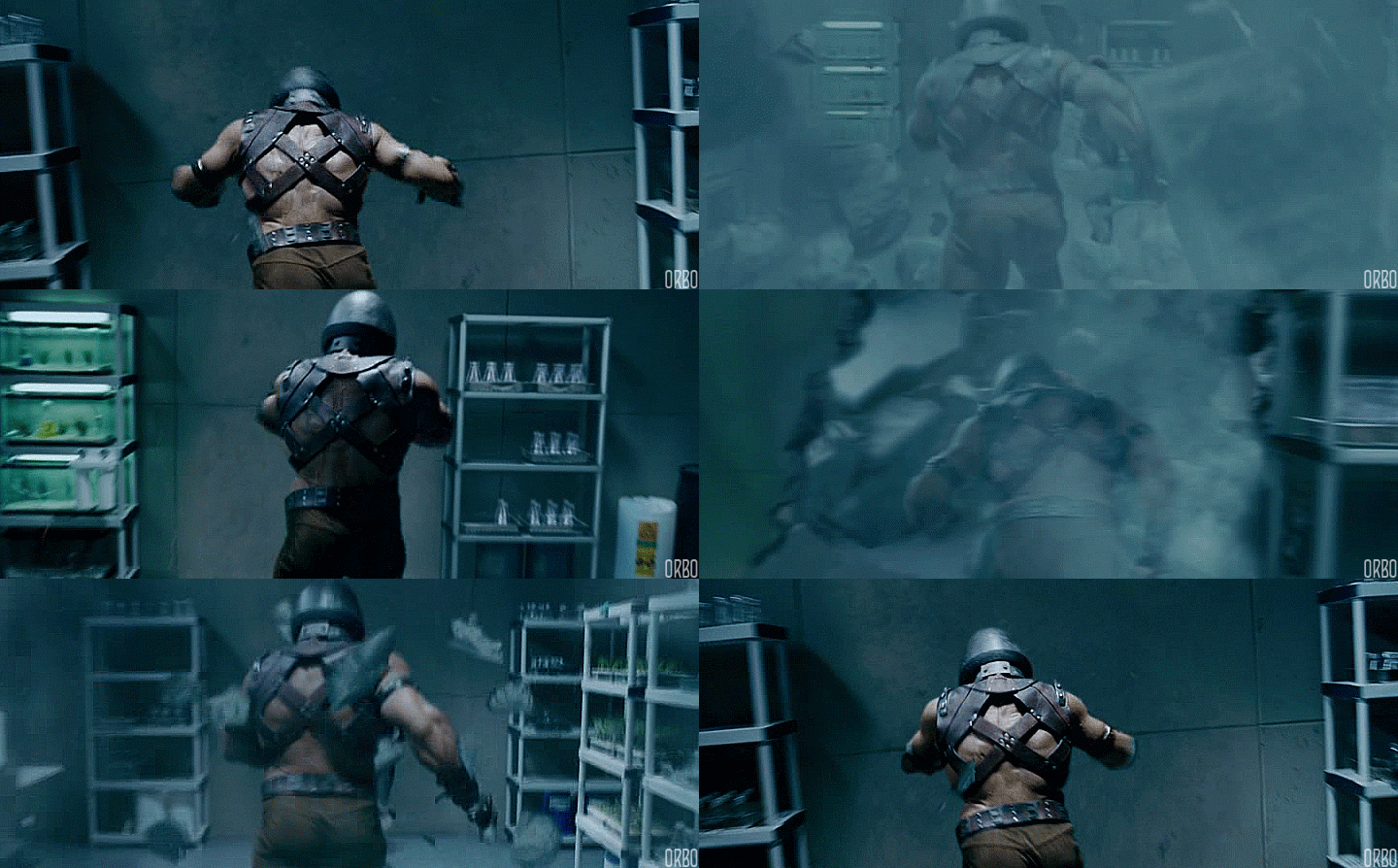
The Top 100 creatures are even punier, falling around ~2 toughness. This may seem like a good thing for trample — and indeed it is — but remember that popular creatures tend to be generic ones that help to round out the early game, such as cards that ramp (e.g. ) or that provide some generic utility (e.g. ). For trample to be most effective, it behooves us to lean into power, hard, so that, like the Juggernaut, nothing can can stop us!
"I like smashing them..."
As of now (12/5/2020) and after the release of Commander Legends, there are 59 commanders that innately have trample, and another 25 commanders that can either obtain or grant trample to other creatures (for a total of 84). With nearly 85 trample-themed commanders to choose from, there seems like quite a few options. For me, there's only one option: the O.G., Hagrid-headed, gnarly, axe-wielding, cape-wearing centaur himself: .
Yes, you have your , or your keyword spreaders like or , but none are so thematic as Ole' Stonebrow. Toss a flannel on this guy, and you'll have Paul Bunyan rolling in his grave in fear, entire forests trembling, and every diner north or west of the Rockies begging he stops by to drop serious coin on their Lumberjack Slam. 's strength comes from his simple design: play creatures with trample (or give creatures trample), and you get an anthem. No smoke and mirrors, no frills, no nonsense.

In fact, let's take a look at the average Stonebrow deck to get some ideas:
Average Stonebrow, Krosan Hero deck

With 70% of the deck either lands or creatures, the rest of the deck leaves us with more ramp, interaction, removal, and more pump-effects. With almost 70% of the creatures innately having trample (25% of the whole deck) and the rest either helping us with ramp (e.g. ) or draw (e.g. ), I like where this is at, especially since we have additional ways of granting creatures trample (e.g. , ).
While I'm all for playing creatures and turning them perpendicular, what if we can tinker with Ole' Stonebrow just a tad to make some of the damage more...surprising?
Belle of the
Years ago, our very own Quinn Miller wrote an amazing article on leading a list themed around . As an eager reader, I loved the idea and brewed a version I could right away with what cards I had laying around and with budgetary constraints. The budget, it turns out, did me in. Outside of landing a lucky , I didn't have the finances for a good-enough mana-base to be able to effectively cast most of the awesome -type cards.
In keeping with the theme while also acknowledging these constraints, why not try out a sub-theme in ? Nearly all the variants come with some distinct advantages:
- They are predominately found in red followed by green.
- They value power above all else.
- Most have trample innately, which means they get buffed further with (often to 8/3).
- They are efficient mana-wise.
- They come barreling out of nowhere.
Point number five is particularly noteworthy, as it allows us to get in some extra damage without telegraphing it. It makes opponents that are unfamiliar with our strategy prone to blowouts, and those that are familiar with it have to keep guessing whether we can barrel out a out of nowhere.
Furthermore, it makes the et al. more like efficient sorceries than creatures. While Wizards has yet to print trample on an instant or sorcery, they teased us with the silver-bordered Super-Duper Death Ray. The mad lads actually printed (functionally) the same card in . Until the day we actually get trample on instants or sorceries, might just be our second-best bet.
Slingin' Spheres
We'll run a nice package of cards that synergize with our effects while trying to keep to under $20 for our splashier cards:
- Double Up: and allow us to double-up on our blitzing buddies. gives us (and everyone else!) a repeatable lightning pal if it sticks.
- Draw: , , , , and help us draw with on the way in, while , , and can draw us further on their way out.
- Damage: , , and help fling damage when our s enter the battlefield.
- Recursion: Finally, , , , and can bring back our after they've struck, as well as any other creatures that may have been removed.
With an onslaught of s, our opponents are likely to feel like poor Justin, where no amount of the mnemonics (see: the five "D's" of Dodgeball) could save him.

Putting it all together, here's our list:
Stonebrow: The Original Baller
What I enjoy about this list is that it retains a stompy, power-matters design, but it also has some neat interactions and layering of triggers to keep things interesting. There's also a lot of room for tinkering, as extra combat effects (e.g. ) work wondrously with , since the +2/+2 buffs stack with each successive combat, as well as upgrades with bombs like and .
Conclusion
Trample is a classic keyword that just screams 'smash' more than The Incredible Hulk, himself. As a form of evasion that rewards you for simply getting bigger and thus dealing more damage, it forces uncomfortable blocking decisions for your opponents, often having them dip out faster than Kevin O'Leary after a bad pitch.

What do y'all think? Do you enjoy trample's 'life total, meet fist' approach, or do you prefer something subtler? Sound off in the comments below!